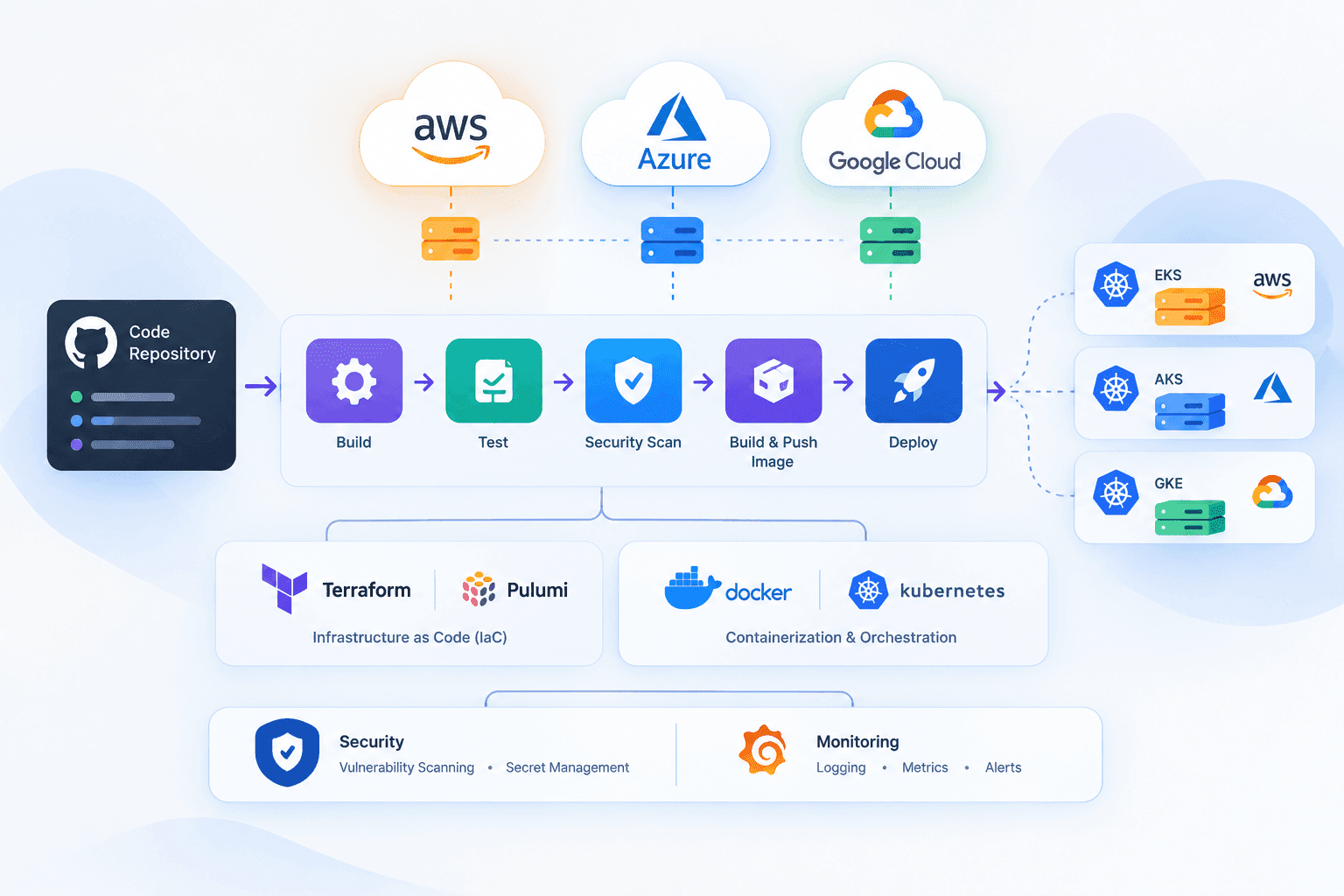
Modern enterprises are increasingly adopting multi-cloud strategies to avoid vendor lock-in and enhance resilience. However, managing CI/CD pipeline automation across diverse environments like AWS, Azure, and GCP introduces significant technical challenges regarding compatibility, security, and deployment velocity. The primary goal of this strategy is to reduce friction and ensure code reaches production safely and quickly, regardless of the cloud provider.
Challenges of Multi-Cloud Deployment
Each cloud platform differs in its native tools and API structures. This variance often leads to knowledge silos where teams require different expertise for each cloud. Furthermore, maintaining unified security policies and performance monitoring becomes harder when resources are distributed. Without robust automation, manual deployment processes become prone to human error and slow down the software development lifecycle.
Strategies for Reducing Deployment Friction
To achieve effective automation, a unified approach based on abstraction is essential. Here are the key practices:
1. Infrastructure as Code (IaC): Use tools like Terraform or Pulumi to define resources programmatically. This allows the same configuration to be deployed across different providers with minimal adjustments, ensuring consistency.
2. Containerization and Orchestration: Rely on Docker and Kubernetes as a fundamental abstraction layer. Since Kubernetes is supported across all major clouds (EKS, AKS, GKE), it facilitates application portability without needing to rewrite delivery pipelines.
3. Vendor-Agnostic CI/CD Tools: Instead of relying solely on native cloud tools like AWS CodePipeline, prefer solutions like GitLab CI, GitHub Actions, or Jenkins. These tools offer greater flexibility in managing tasks across multiple environments from a single interface.
Enhancing Security and Centralized Monitoring
In a multi-cloud environment, security must be integrated early (DevSecOps). This includes vulnerability scanning for containers and secret management using centralized solutions like HashiCorp Vault instead of storing them in disparate cloud tools. Additionally, logging and monitoring should be unified using tools like Prometheus and Grafana to gain a comprehensive view of all environments.
Conclusion
Effective CI/CD pipeline automation is the cornerstone of success in the multi-cloud era. By adopting agnostic tools and focusing on containerization and IaC, companies can reduce operational complexity and increase the speed of innovation. Investing in a thoughtful automation strategy ensures that deployments remain seamless and scalable, no matter where the servers reside.